
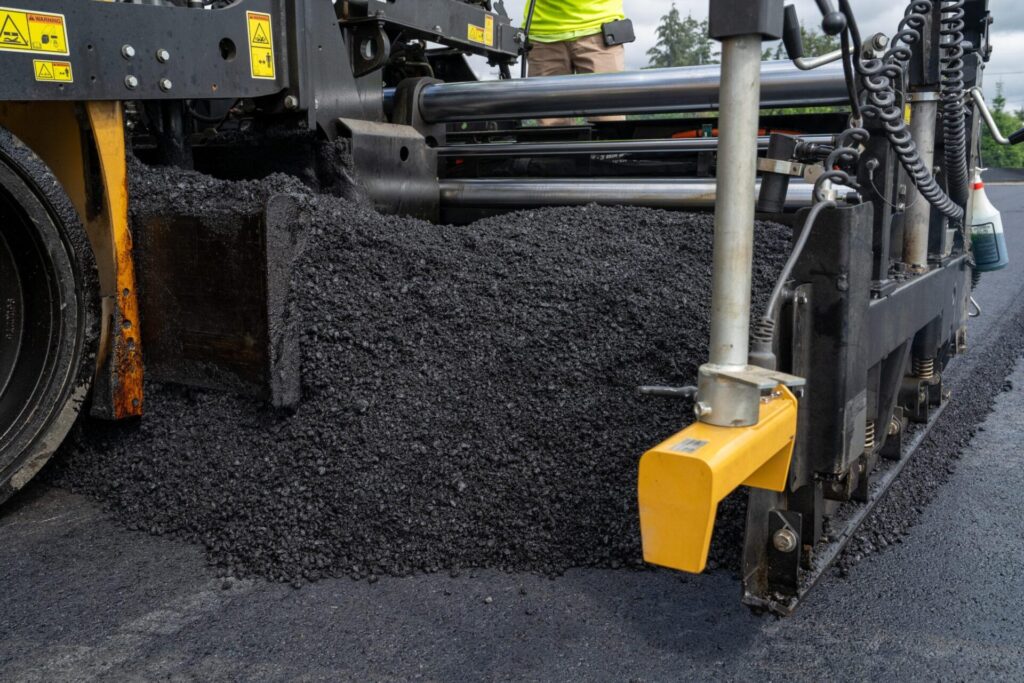
As the construction industry works towards more sustainable practices, reclaimed asphalt is playing an increasingly important role in road building and maintenance across Ireland and the UK.
Rather than sending material removed from an existing road to landfill, it can often be recovered, processed and reused in the production of new asphalt. This helps reduce waste, conserve natural resources and support a more circular approach to infrastructure development.
But how is reclaimed asphalt collected, processed and incorporated into a new road surface? Below, we look at each stage of the process and the benefits it can provide.
What Is Reclaimed Asphalt?
Reclaimed asphalt is material removed from an existing asphalt surface during maintenance, repairs or resurfacing work. It is commonly known within the industry as reclaimed asphalt pavement, or RAP.
The material usually contains two valuable components:
- Aggregate, including stone, sand and gravel
- Aged bituminous binder, which originally held the mixture together
Provided the material is properly recovered and processed, these components can be used again in new asphalt mixtures or for other suitable road-construction applications.
The European Asphalt Pavement Association distinguishes between asphalt reuse—where the aggregate and aged binder perform their original functions in a new asphalt mixture—and recycling, where the recovered material performs a different or lesser engineering function, such as use in an unbound road layer. EAPA
How Is Asphalt Reclaimed?
The process normally begins when an existing asphalt surface is removed. This may be required because the road has become damaged, needs to be strengthened or must be adjusted before a new surface is installed.
A milling machine is frequently used to remove the upper layers of asphalt in a controlled manner. The machine breaks the existing surface into smaller pieces while maintaining the required depth and profile of the road.
The removed material is collected and transported to a suitable processing or asphalt-production facility. Larger sections removed through excavation may also be recovered, although these usually require additional crushing before they can be reused.
Processing the Recovered Material
Reclaimed asphalt cannot simply be taken directly from an old road and placed into a new mixture. It must first be carefully processed and assessed.
The main processing stages can include:
Crushing
Large pieces of recovered asphalt are broken down into smaller, more manageable particles.
Screening
The crushed material is passed through screens to separate it into different sizes. This allows producers to create consistent stockpiles and accurately control the amount added to a new mixture.
Removing Contamination
Unwanted materials such as soil, concrete, vegetation or other debris must be removed. Clean and well-managed reclaimed asphalt is essential for producing a reliable finished product.
Testing
The recovered material may be tested to determine its aggregate grading, binder content, moisture level and overall condition. These results help specialists design the new asphalt mixture correctly.
Reclaimed asphalt is then stored in controlled stockpiles until it is ready to be used.
How Is Reclaimed Asphalt Added to a New Mixture?
At the asphalt plant, a carefully calculated quantity of reclaimed material is combined with new aggregate and fresh bitumen. Depending on the mixture requirements, additives or rejuvenating agents may also be used to help manage the properties of the aged binder.
The exact proportion of reclaimed asphalt varies between projects. It depends on factors including:
- The intended road layer
- Traffic levels and loading
- The condition of the reclaimed material
- The required performance of the finished surface
- The applicable project specification
- The capabilities of the asphalt plant
The mixture must be designed and tested to ensure it satisfies the required standards for strength, durability, flexibility and resistance to moisture.
Using reclaimed material does not mean compromising on quality. When properly processed and incorporated through an appropriate mixture design, it can contribute to asphalt that performs effectively throughout its intended service life. The Federal Highway Administration identifies cost-effectiveness, environmental responsibility and strong performance as the three key requirements for successful asphalt recycling. FHWA
Where Can Reclaimed Asphalt Be Used?
Reclaimed asphalt can be used in several parts of a road structure, depending on its quality and the requirements of the project.
Potential applications include:
- Surface-course asphalt mixtures
- Binder-course mixtures
- Asphalt base layers
- Granular road foundations
- Temporary roads and access routes
- Hardstanding and other civil-engineering applications
Material used in a new bound asphalt mixture retains more of its original value because both its aggregate and binder can perform useful functions again. When this is not technically suitable, it may still provide value as a foundation or unbound construction material.
What Are the Benefits?
Reduced Demand for New Materials
Reusing aggregate and binder from existing roads reduces the quantity of newly extracted stone and fresh bitumen required for production.
Less Construction Waste
Recovering old asphalt can prevent reusable material from being unnecessarily sent to landfill.
More Efficient Use of Resources
Reclaimed asphalt keeps valuable construction materials in circulation and supports a more sustainable, circular approach to road building.
Potential Cost Efficiencies
Reduced demand for new raw materials and disposal can help create project efficiencies, although the final cost will depend on processing, transport, availability and specification requirements.
Reduced Transportation Requirements
When reclaimed material can be processed or reused close to the project, it may reduce the distance travelled by both removed material and replacement resources.
Quality Control Remains Essential
The successful use of reclaimed asphalt depends on careful material management, appropriate equipment and experienced personnel.
Variations in the source material, aggregate size, binder condition and moisture content must all be considered. Adding too much reclaimed material without adapting the mixture design could affect characteristics such as stiffness, workability or resistance to cracking.
For this reason, every mixture must be designed around the specific application rather than relying on a standard percentage for every project.
Accurate testing, controlled processing, correct temperatures and effective compaction all contribute to the quality of the finished road surface.
Supporting More Sustainable Road Construction
Reclaimed asphalt demonstrates how an existing road can become a valuable resource for future infrastructure.
By recovering and processing old surfacing materials, the industry can reduce waste, conserve natural resources and lower its reliance on newly produced materials. When supported by professional mixture design and quality control, reclaimed asphalt can be used without losing sight of safety, durability or performance.
MMB Surfacing provides professional road-surfacing solutions for projects throughout Ireland and the UK. Our experienced teams, specialist equipment and commitment to quality allow us to complete work safely, efficiently and to a consistently high standard.
Discuss Your Next Surfacing Project
Planning a road surfacing, repair or maintenance project in Ireland or the UK? Contact MMB Surfacing today to discuss your requirements with our experienced team.
Visit https://mmbsurfacing.net/contact-us/ to get started.